
Hair loss can become a real concern when it exceeds the natural threshold of 50 to 100 hairs per day. In 2025/2026, three treatments continue to dominate the medical management of androgenetic alopecia: finasteride, dutasteride, and minoxidil. These molecules are currently the most well-documented, with reproducible results when prescribed, monitored, and controlled by a physician.
Important: every case of hair loss is different. What works for one patient may be ineffective or even unsuitable for another. That is why specialized medical teams, such as those at the Phenicia Clinic in Marseille, play a central role: establishing an accurate diagnosis, ensuring the prescription is safe, and supporting the patient over several months.
Understanding hair loss
Androgenetic alopecia: the most common form
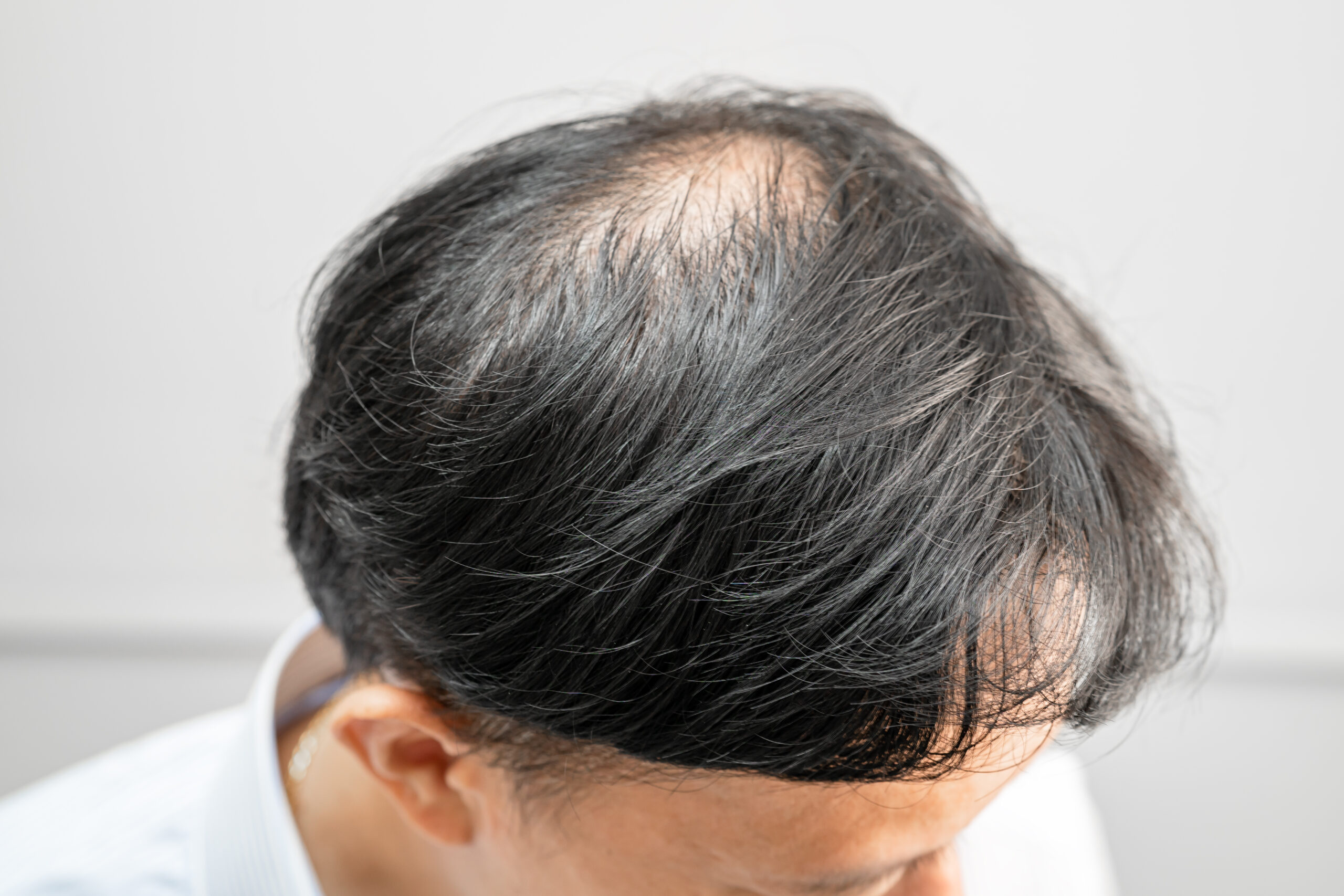
Androgenetic alopecia (AGA), sometimes referred to as "baldness," accounts for the majority of progressive hair loss in men, but also affects women. It is based on a hormonal mechanism: DHT (dihydrotestosterone). This hormone gradually miniaturizes the hair follicles, reducing the thickness of the hair and then blocking the growth cycle.
In men, it often starts at the temples and the top of the head. In women, hair loss is more diffuse, mainly along the center parting.
A medical diagnosis, not self-medication
Contrary to popular belief, hair loss is not always hormonal: stress, deficiency, post-pregnancy, scalp conditions... there are several possible causes. Medical advice is therefore essential. At the Phenicia Clinic, a trichoscopic examination and a personalized assessment can determine whether hormone treatment is appropriate or whether another approach should be considered.
Finasteride: the standard treatment
Finasteride (1 mg/day) is currently the most commonly prescribed oral treatment for androgenetic alopecia in men.
How does it work?
Finasteride blocks type II 5-alpha reductase, the enzyme that converts testosterone into DHT in the scalp. Result: less DHT = stabilization of hair loss and resumption of a more normalized growth cycle.
What results can be expected?
- stabilization often within 3 to 6 months;
- visible regrowth at 6–12 months;
- improvement, especially on the top of the head.
Finasteride is not a "miracle" treatment: it prevents the progression of baldness and sometimes allows partial regrowth. But in cases of advanced baldness (Norwood 5+), it is not sufficient on its own.
Side effects: real transparency
Effects may occur and should be monitored:
- decreased libido (rare);
- sexual dysfunction (uncommon, often reversible);
- mood swings;
- depressive episodes in susceptible patients.
These cases remain in the minority but warrant clinical follow-up, which explains the importance of specialized support at the Phenicia Clinic. Discontinuing treatment causes a gradual return to the initial state within 6 to 12 months.
Dutasteride: the more powerful version
Dutasteride acts like finasteride... but more broadly. It inhibits both forms of 5-alpha reductase: type I and type II. Its action is therefore more complete, with a reduction in DHT of over 90%.
Who is it for?
In France, dutasteride does not have marketing authorization for the treatment of androgenetic alopecia. Its use is therefore strictly regulated by experienced physicians. The Phenicia Clinic offers microneedling treatment with dutasteride, particularly post-operatively as part of an FUE hair transplant.
Risks
The adverse effects are similar to those of finasteride, with particular vigilance required in patients with fragile cardiovascular or psychiatric conditions.
Minoxidil: acts directly on the follicle
Minoxidil is a stimulating molecule that has been available in topical (2%/5%) or microdose oral form for several years.
How does it work?
Through its vasodilator effect, minoxidil:
- improves microcirculation in the scalp;
- extends the anagen phase of hair growth;
- promotes regrowth.
When applied topically, it acts locally. In micro-doses taken orally (0.25 to 2.5 mg/day), it offers an interesting alternative when finasteride cannot be used.
Visible results
- first effects at 2–4 months;
- Initial shedding (transient hair loss) is normal at the beginning.
Possible effects
- scalp irritation;
- hypertrichosis (excessive hair growth elsewhere);
- Mild hypotension when taken orally.
Combinations: the most effective strategy
No single molecule is sufficient on its own in established forms. The combination of finasteride and minoxidil is currently the most widely used treatment, with significant results in stabilizing and restoring hair density.
Dutasteride can be incorporated into specific strategies, particularly when baldness is too advanced and finasteride is not sufficient.
The effectiveness of PRP: a real plus at the Phenicia Clinic
In cases of androgenetic alopecia, PRP (Platelet-Rich Plasma) is now a major lever in 2025/2026. Unlike certain supplements or cosmetic treatments, PRP has a clear biological mechanism: it stimulates growth factors present in the scalp, improves vascularization, and promotes hair quality and density.
Why does PRP work?
- stimulates follicular stem cells;
- improves the biological environment;
- strengthens weakened hair;
- limits local inflammation.
In practice, PRP does not replace hormone treatments, but rather optimizes them. The following are often observed:
- better density;
- thicker hair;
- a decrease in seasonal decline.
This complementary approach yields excellent results at the Phenicia Clinic, particularly when used as part of a comprehensive protocol (finasteride or dutasteride + PRP + minoxidil, depending on the indication).
Conclusion: a personalized anti-hair loss protocol at the Phenicia Clinic
Finasteride, dutasteride, and minoxidil remain the most effective treatments for androgenetic alopecia in 2025/2026. However, their effectiveness depends on the correct indication, continuity of treatment, and medical follow-up.
When performed in a specialized clinical setting, PRP offers a real boost in results, without resorting to hormonal treatments.
At the Phenicia Clinic, every treatment plan is based on:
- an accurate diagnosis;
- an appropriate protocol;
- monitoring tolerance;
- complementary solutions such as PRP;
- support over several months.
There is no universal treatment for hair loss. It requires a tailored approach that combines hormonal stability, follicle stimulation, a healthy lifestyle, and sometimes surgical restoration in advanced cases.
Consulting a doctor means securing your treatment and maximizing its effect. Success is built over the long term, with a comprehensive and medical approach to hair issues.