
PRK is a laser refractive surgery, ideal for patients with thin corneas or moderate visual defects. During your initial consultation, a comprehensive assessment will evaluate your cornea and your visual needs. If PRK is the best option, we will support you throughout the preparation process.
TransPKR is an advanced version of PKR. Non-invasive and fully automated, it does not involve any manual manipulation. Thanks to this cutting-edge technique, the excimer laser performs the procedure with precision, removing the epithelium and reshaping the cornea in a single step. It is particularly suitable for patients with thin corneas or who are reluctant to undergo manual techniques.
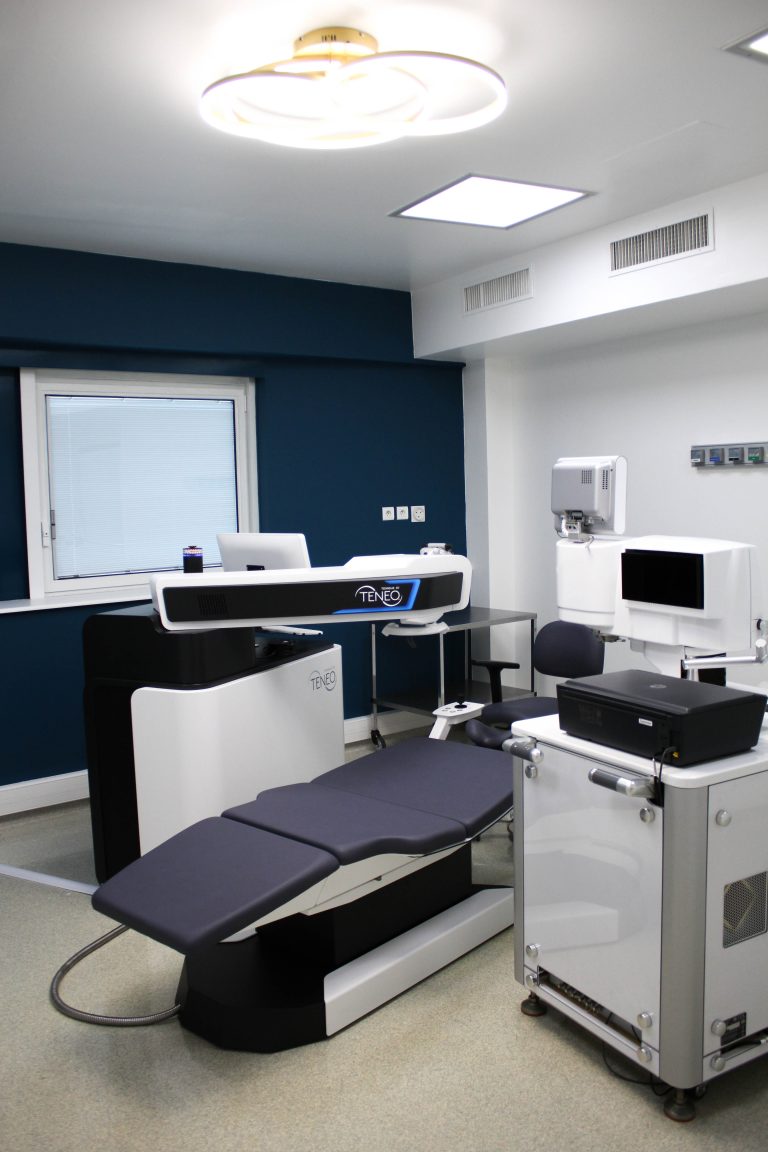
At Phenicia Vision, we pride ourselves on offering a calm and professional experience. You will be welcomed into a peaceful environment, with refreshments to help you relax. Our team will ensure your comfort and answer all your questions to provide you with personalized support.
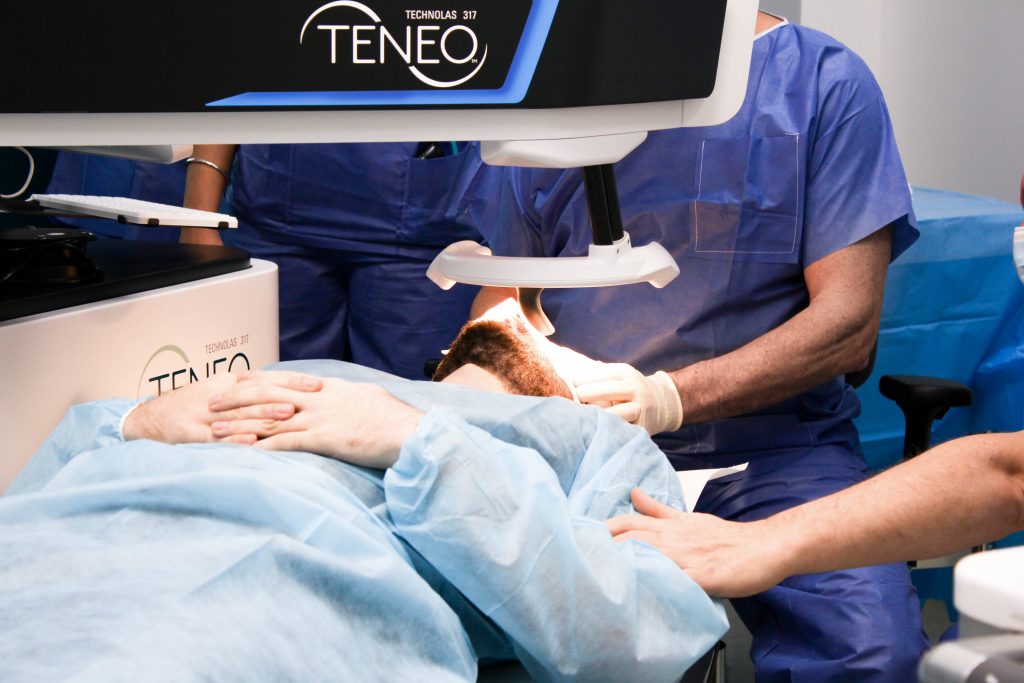
The procedure takes about 20 minutes for both eyes. After local anesthesia, an excimer laser reshapes the surface of the cornea. Unlike LASIK, it is not necessary to create a corneal flap.
The Teneo laser uses real-time eye tracking and iris recognition for optimal precision, ensuring perfect synchronization with the SIRUS topographer to eliminate any risk of error.
After the operation, you may experience slight discomfort for a few days, with a protective lens placed over the eye. Your vision will gradually improve, reaching optimal sharpness within 1 to 2 weeks.
LASIK can correct nearsightedness, farsightedness, astigmatism, and presbyopia, providing stable and long-lasting visual acuity.
A laser technique for correcting myopia, astigmatism, and hyperopia, particularly suited to thin corneas.
PKR does not create a corneal flap and is ideal for thin corneas.
An automated, non-invasive version of PRK, offering increased precision and faster recovery.
Approximately 15 minutes per eye using an excimer laser to reshape the cornea without incisions.
The procedure is painless, but slight discomfort may persist afterward.
Vision improves within a few days and becomes clear within 1 to 2 weeks.
Less invasive, faster recovery, and increased safety.
Some temporary side effects may occur, and conditions such as dry eyes may make the procedure unsuitable.
State-of-the-art equipment, expert team, and pleasant environment.