
Cryolipolysis of the chest in Marseille
Non-surgical medical treatment to refine the chest and reshape the upper bust
Fat deposits located in the chest area are a common aesthetic concern, particularly for men. This accumulation of fat in the chest area can give the appearance of swollen, rounded, or sagging breasts, often causing aesthetic discomfort, complexes, and a loss of self-confidence.
In women, excess fat can also accumulate in the upper and lateral breast areas, disrupting the natural harmony of the bust and décolleté.
Despite a healthy lifestyle, weight loss, or regular exercise, localized fat in the chest often remains resistant to conventional methods.
Cryolipolysis of the chest is now a non-invasive cosmetic medicine solution that can permanently reduce fat deposits without surgery, anesthesia, or downtime.
In Marseille, care is provided by Clinique Phénicia, in a secure medical setting, with personalized support.
Why does fat accumulate in the chest area?
The chest area is particularly sensitive to hormonal changes, individual metabolism, and weight fluctuations. Several factors can explain the appearance and persistence of excess chest fat.
Contributing factors
- Hormonal imbalances (estrogen/androgen ratio)
- Genetic predisposition
- Weight gain or repeated weight fluctuations
- Sedentary lifestyle
- Skin and tissue aging
- Decreased skin elasticity
Difference between gynecomastia and excess fat
It is essential to distinguish between two very different situations:
- Glandular gynecomastia: related to the development of the male mammary gland. It generally requires surgical treatment.
- Pseudo-gynecomastia caused by excess fat tissue: eligible for cryolipolysis.
👉 A prior medical diagnosis is essential in order to determine the most appropriate treatment.
Why exercise and diets are not always enough
Some pectoral fat cells are biologically more resistant to lipolysis induced by exercise or calorie restriction.
Even with targeted muscle strengthening, these fat cells persist.
Cryolipolysis allows for localized and targeted action directly on these stubborn fat cells, where conventional methods reach their limits.
How to slim down your chest without surgery: what are the options?
Depending on the nature of the excess skin and the quality of the skin, several options can be considered:
- Cryolipolysis of the chest
- Radiofrequency to improve skin tone
- Gynecomastia surgery or breast reduction, as a last resort
When excess fat is localized and moderate, cryolipolysis is an effective, credible, and safe alternative to surgery.
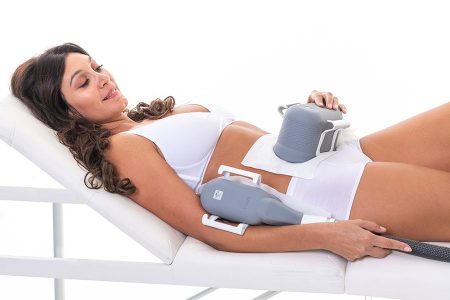
Cryolipolysis of the chest: medical principle
How does cryolipolysis work?
Cryolipolysis is based on a recognized scientific principle:
Fat cells (adipocytes) are particularly sensitive to intense cold, unlike surrounding tissues (skin, nerves, muscles).
Controlled cooling results in:
- The crystallization of adipocytes
- Their programmed destruction (apoptosis)
- Their gradual elimination by the lymphatic system
This elimination is gradual over several weeks, ensuring a natural, harmonious, and lasting result in the chest area.
Treatment objectives
- Targeted reduction of chest fat
- Breast refinement
- Redefining the bust line
- Improvement in overall aesthetic balance
Indications and limitations of breast cryolipolysis
Ideal indications
- Pseudo-gynecomastia due to fat accumulation
- Localized and moderate fat
- Resistance to exercise and weight loss
- Toned or slightly sagging skin
- Refusal or contraindication to surgery
When cryolipolysis is not suitable
- True glandular gynecomastia
- Significant skin laxity
- Marked skin excess
- Widespread obesity
- Expecting immediate or dramatic results
👉 A medical evaluation is essential in order to make a realistic and safe diagnosis.
Which areas of the chest can be treated?
Cryolipolysis allows for precise targeting:
- The central chest area (mainly in men)
- The lateral pectoral areas
- The supra-mammary areas
- Adjacent areas (armpits, upper flanks) in comprehensive upper body care
How a session at the Phénicia Clinic works
Prior medical consultation
It allows you to evaluate:
- The nature of the excess (fat or gland)
- The thickness of the fat fold
- Skin quality and elasticity
- Areas to be treated
- Patient expectations
Preparing the area
The skin is cleansed and protected by a cryoprotective wipe, ensuring safe diffusion of the cold.
Cold treatment
Clinique Phénicia uses Cristal Pro technology, a state-of-the-art medical device capable of reaching a controlled temperature of up to –12°C.
The applicator sucks up and stabilizes the fat fold.
A sensation of tension followed by coldness is felt, quickly followed by temporary numbness, which is generally well tolerated.
End of session and drainage
A draining massage is performed to promote the elimination of destroyed fat cells.
Additional lymphatic drainage may be offered depending on the profile.
Results of cryolipolysis on the chest
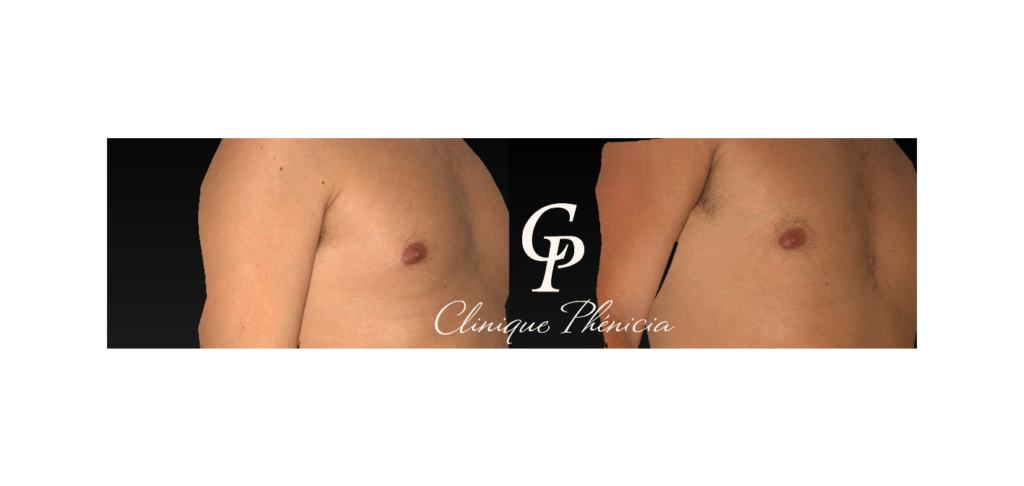
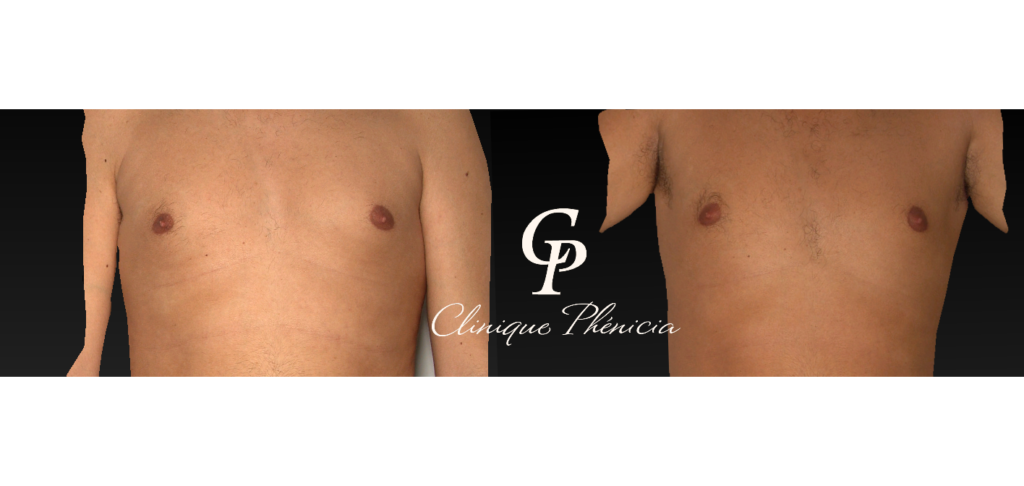
First visible effects: 3 to 4 weeks
Optimal result: 2 to 3 months
Average reduction in fat volume: 20 to 30% per session
An additional session may be considered if necessary.
There are no scars, no time off work, and you can resume your activities immediately.
Cryolipolysis or breast surgery?
Cryolipolysis
- Non-invasive technique
- Without anesthesia
- Simple suites
- Gradual and natural results
Surgery
- Indicated for significant glandular or skin excess
- Invasive procedure
- Necessary postoperative procedures
Price of cryolipolysis for the chest in Marseille
- First session: $400
- Second session: $300
A personalized quote is always provided after a medical consultation.
Cryolipolysis of the chest: frequently asked questions
Is cryolipolysis effective on the chest?
Yes, when it comes to localized excess fat.
Can it treat gynecomastia?
Only the fatty form. Glandular gynecomastia requires surgery.
How many sessions are needed?
Generally one to two sessions depending on individual response.
Are the results sustainable?
Destroyed fat cells do not regenerate. However, weight gain can increase the volume of the remaining cells.
What are the contraindications?
Cold-related conditions, active skin conditions, severe sensitivity disorders, pregnancy (precautionary principle).